Good part design can improve material distribution, reduce tooling costs, improve part quality, and help ensure consistent production. Below are some of the most important design considerations when developing parts for thermoforming.
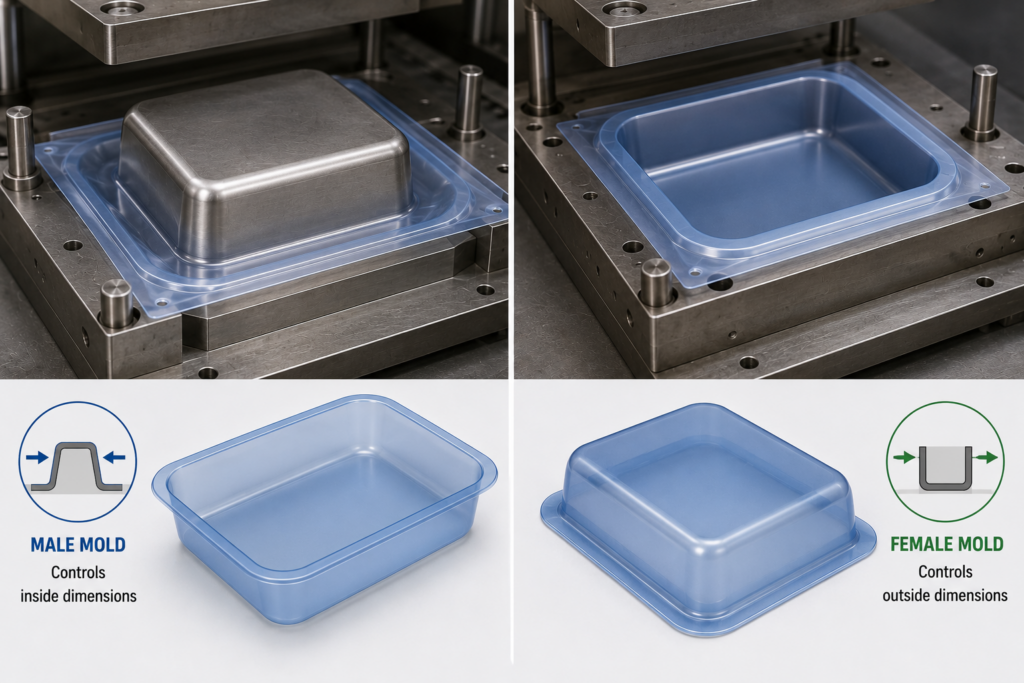
1. Select the Appropriate Mold Type (Male vs. Female)
One of the first decisions in thermoforming is selecting whether a male or female mold best fits the application’s dimensional and cosmetic requirements. Mold selection can influence wall thickness distribution, surface finish, and critical dimensions.
Recommended:
Benefits:
- Use female molds when exterior dimensions are critical.
- Use male molds when interior dimensions are critical.
- Evaluate cosmetic surface requirements early.
- Improved dimensional accuracy.
- Better surface finish control.
- Optimized material distribution.
2. Maintain Uniform Part Depth
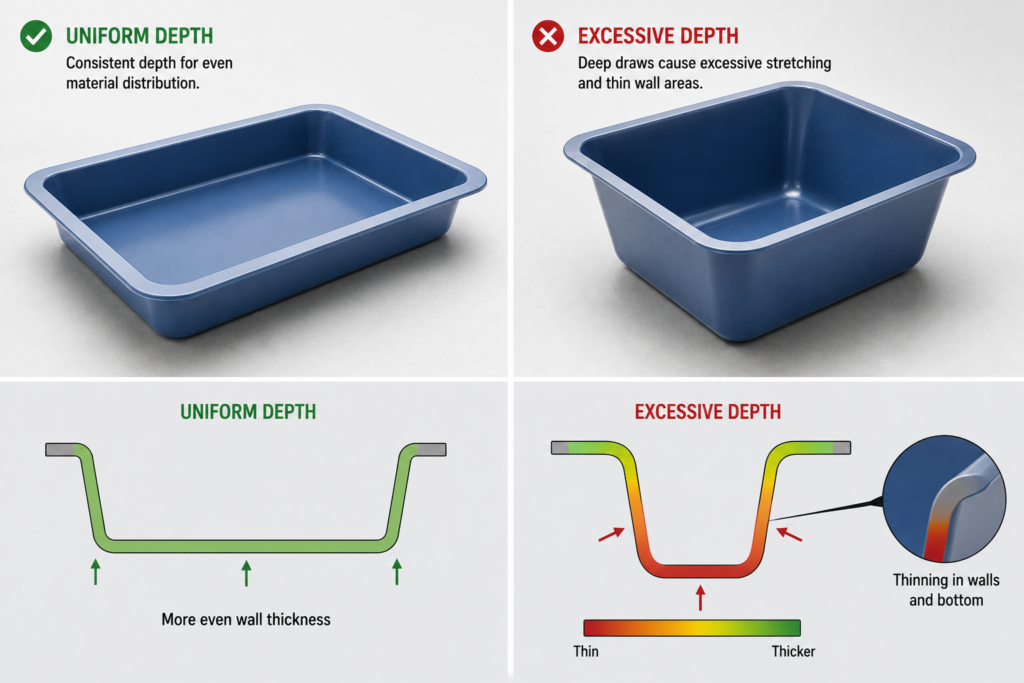
As thermoformed parts become deeper, the plastic sheet stretches further and may create areas with reduced wall thickness. Maintaining consistent depths helps improve material distribution and overall part consistency.
Recommended:
Benefits:
- Keep depths as consistent as possible.
- Avoid abrupt depth changes.
- Design gradual transitions.
- More uniform wall thickness.
- Better part consistency.
- Reduced risk of thinning.
3. Add Draft Angles
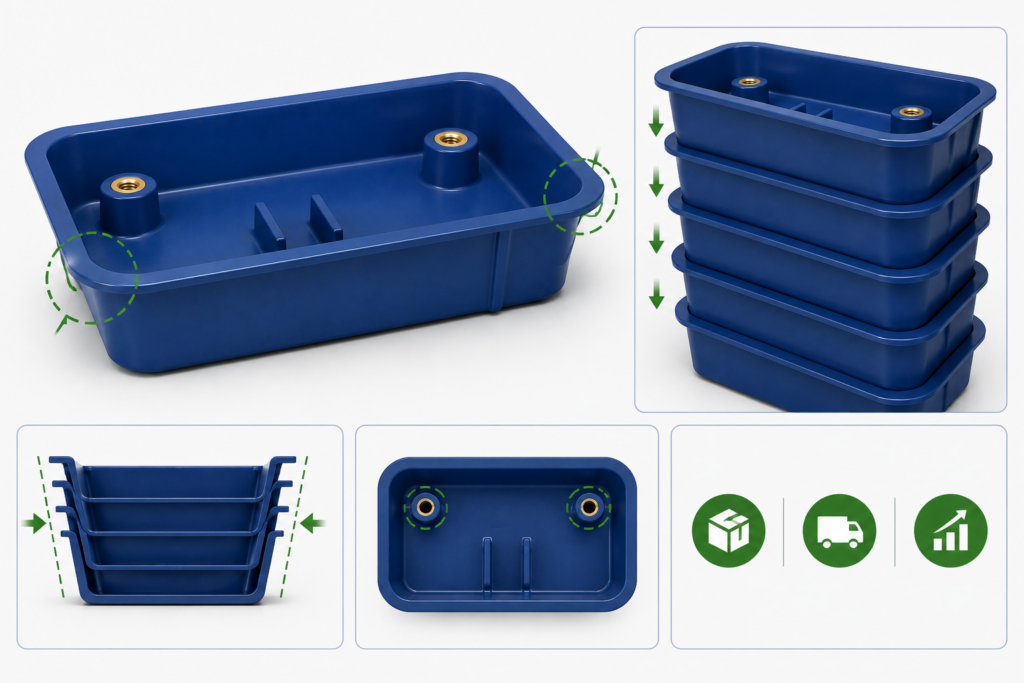
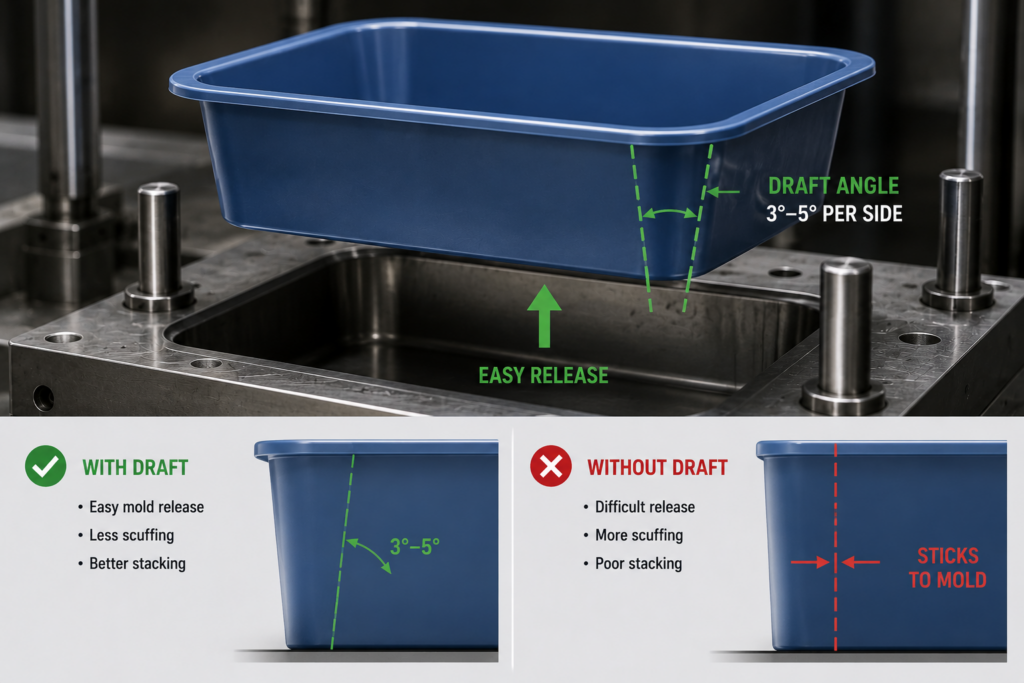
Draft angles help formed parts release from the mold and improve stacking and handling after production. Proper draft can also reduce part distortion and improve manufacturing efficiency.
Recommended:
Benefits:
- Minimum 3°–5° draft per side.
- Increase draft on deeper parts.
- Draft all vertical surfaces.
- Easier mold release.
- Reduced scuffing.
- Improved nesting and stacking.
4. Use Generous Radii and Rounded Corners
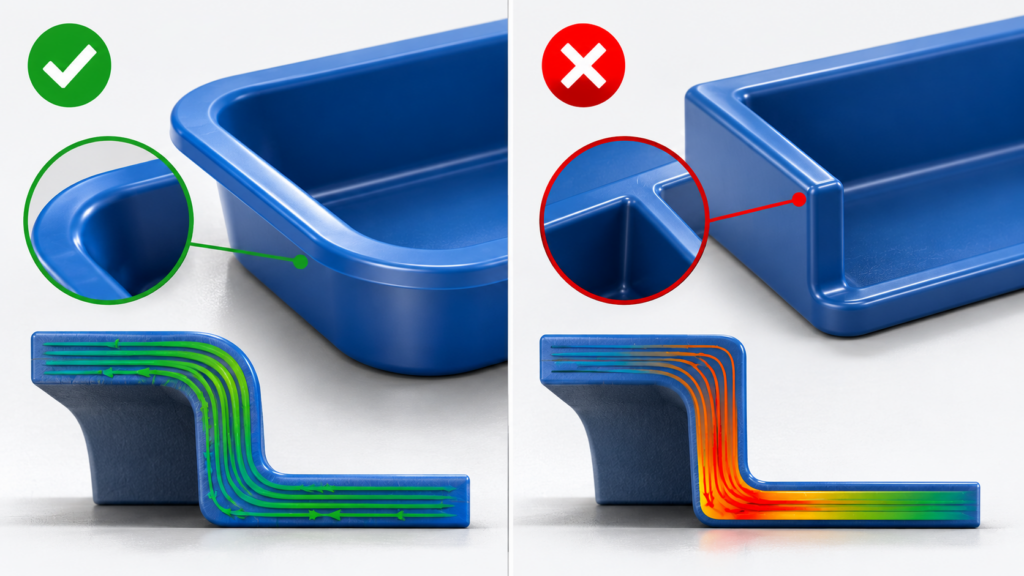
Sharp corners can cause excessive stretching and uneven material distribution during forming. Generous radii help material flow more evenly throughout the part.
Recommended:
Benefits:
- Use generous inside and outside radii.
- Avoid sharp corners.
- Blend features smoothly.
- Improved material flow.
- Better strength.
- Reduced thinning.
5. Design for Material Distribution
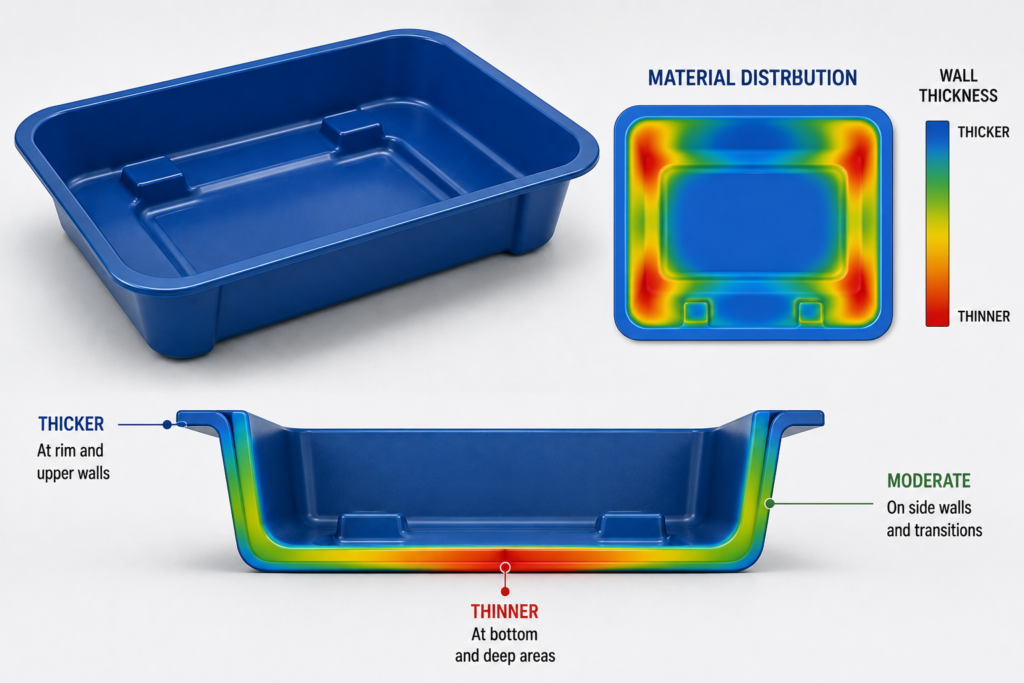
Plastic sheet material naturally stretches as it conforms to the mold surface, resulting in varying wall thicknesses. Designing with material distribution in mind can help maintain strength in critical areas.
Recommended:
Benefits:
- Place critical features where material remains thicker.
- Consider draw depth during design.
- Evaluate wall thickness requirements early.
- Improved structural performance.
- Better consistency.
- Reduced weak areas.
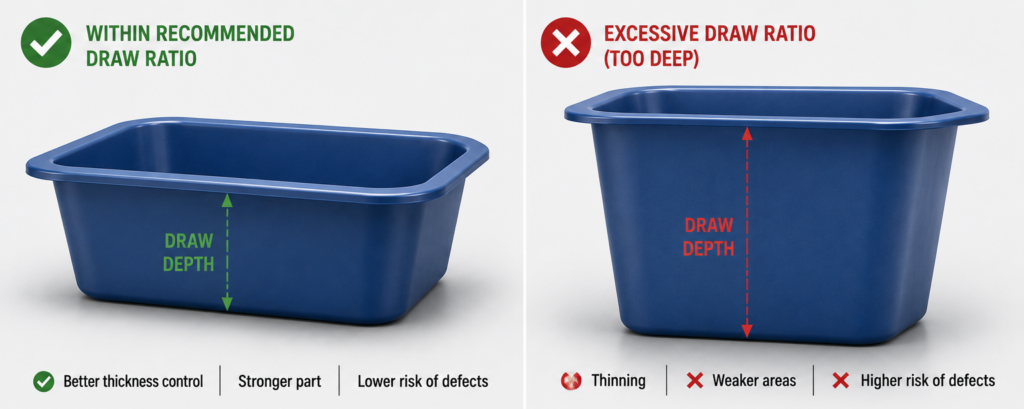
6. Avoid Excessive Draw Ratios
Deep parts require greater material stretching, which can make wall thickness more difficult to control. Keeping draw ratios within practical limits helps improve part quality and consistency.
Recommended:
Benefits:
- Keep draw ratios within practical limits.
- Consider plug-assist forming for deep parts.
- Review deep draw applications early.
- Improved wall thickness consistency.
- Better part quality.
- Lower scrap rates.
7. Consider Trimming and Secondary Operations
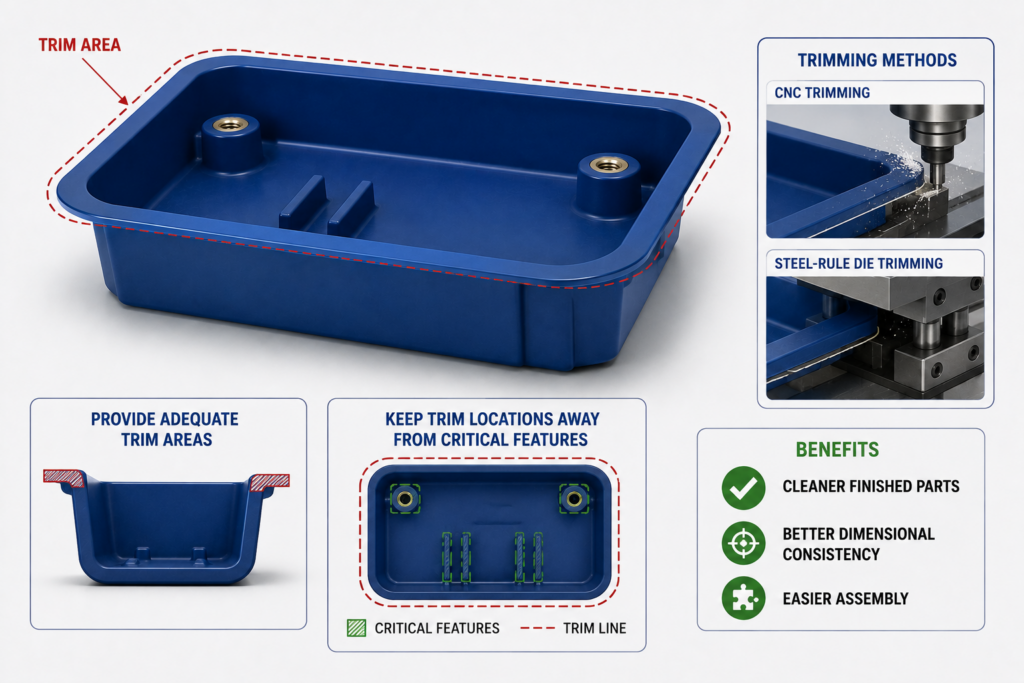
Most thermoformed parts require trimming to achieve their final shape and dimensions. Designing for trimming early can improve part quality and simplify production.
Recommended:
Benefits:
- Provide adequate trim areas.
- Consider CNC trimming or steel-rule die trimming.
- Design trim locations away from critical features.
- Cleaner finished parts.
- Better dimensional consistency.
- Easier assembly.
8. Design for Stacking and Nesting
Many thermoformed trays, containers, and packaging products must stack or nest efficiently for storage and transportation. Proper design can reduce shipping costs and improve handling.
Recommended:
Benefits:
- Include sufficient draft.
- Avoid features that prevent nesting.
- Evaluate stack height requirements.
- Reduced shipping costs.
- Improved handling.
- Better packaging efficiency.