Good part design can reduce tooling costs, improve part quality, shorten production cycles, and help prevent manufacturing issues. Below are some of the most important design considerations when developing parts for injection molding.
1. Maintain Uniform Wall Thickness
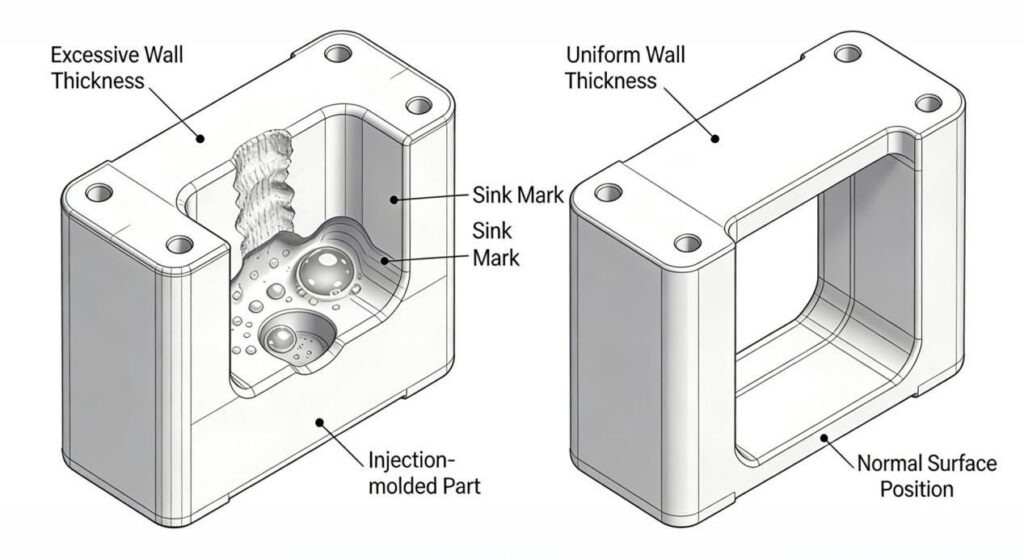
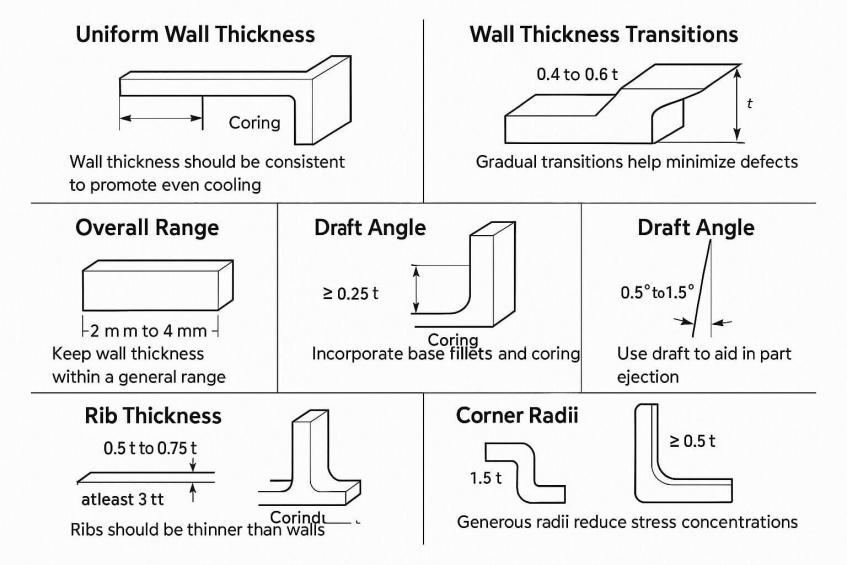
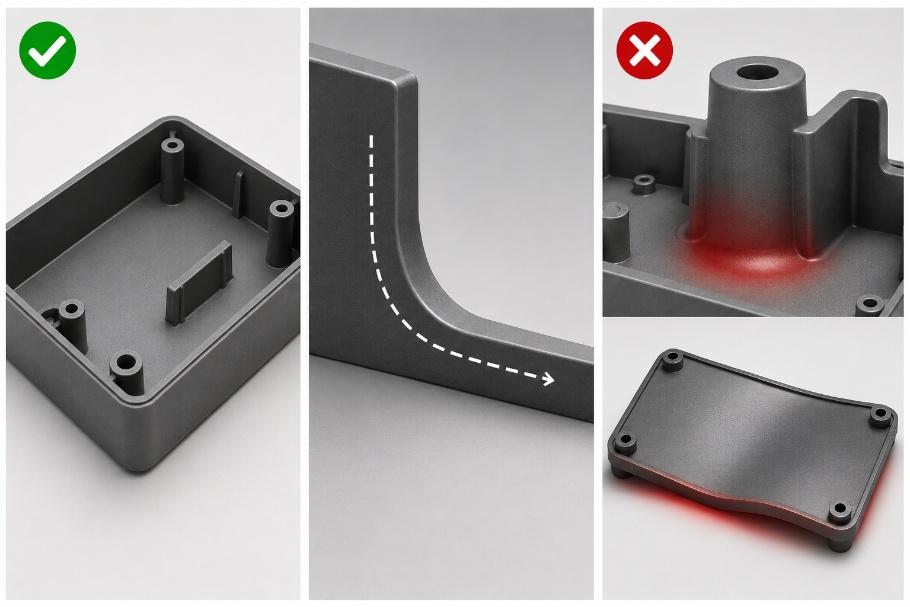
Keeping wall thickness as consistent as possible helps plastic flow evenly through the mold and reduces the risk of defects such as sink marks, warpage, and voids.
Recommended:
Avoid:
- Use consistent wall thickness throughout the part.
- Transition gradually between thick and thin sections.
- Follow material-specific wall thickness recommendations.
- Large variations in wall thickness.
- Heavy sections that can cause sink marks or long cooling times.
2. Add Draft Angles
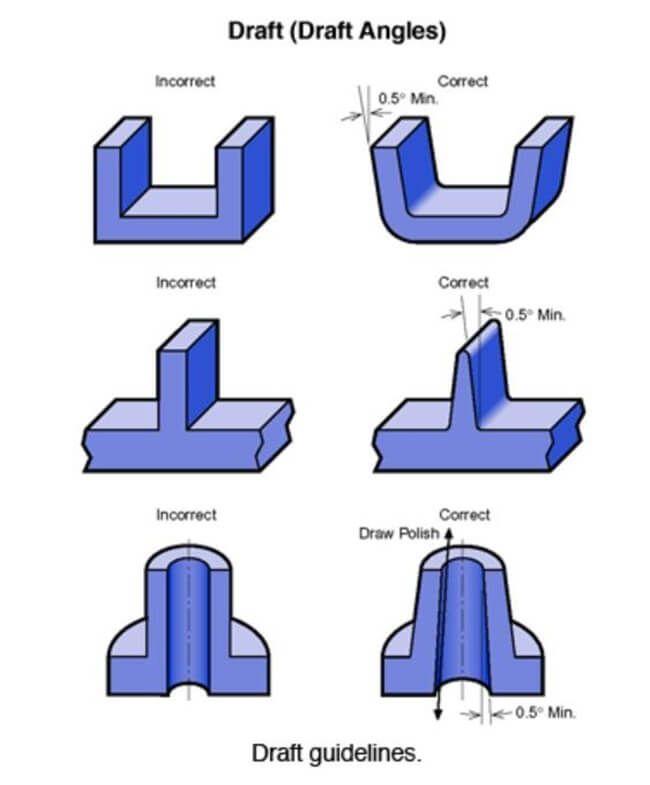
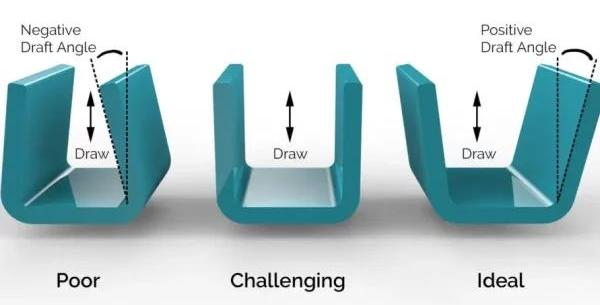
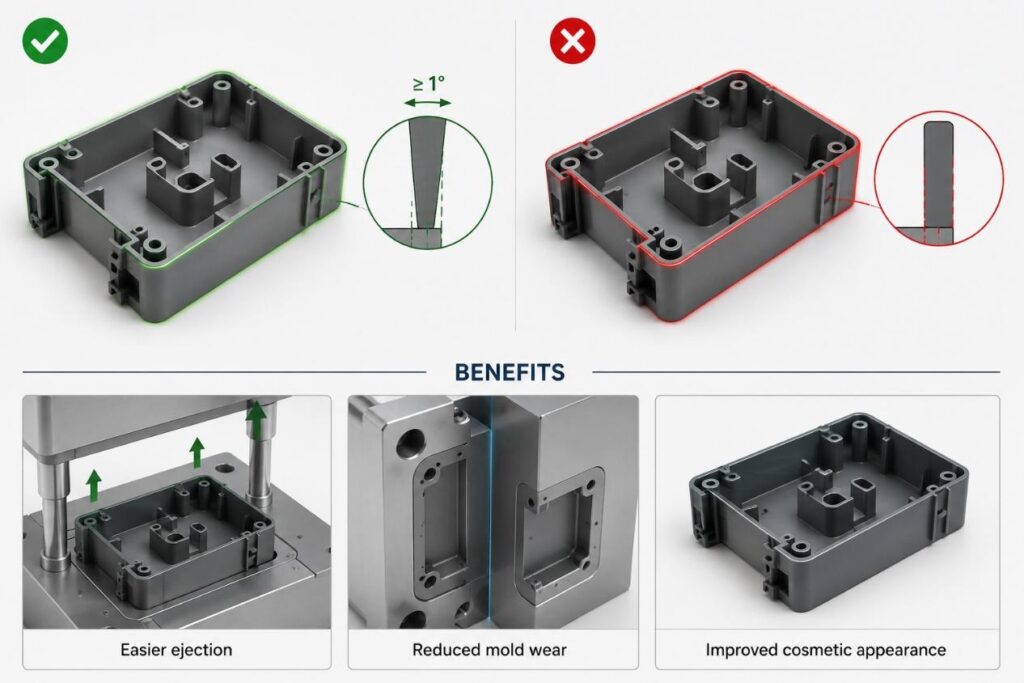
Draft angles allow molded parts to release more easily from the mold, reducing drag marks and part damage during ejection.
Recommended:
Benefits:
- Minimum 1° draft per side.
- Increase draft for textured surfaces.
- Add draft to all vertical walls.
- Easier ejection.
- Reduced mold wear.
- Improved cosmetic appearance.
3. Use Ribs Instead of Thick Walls
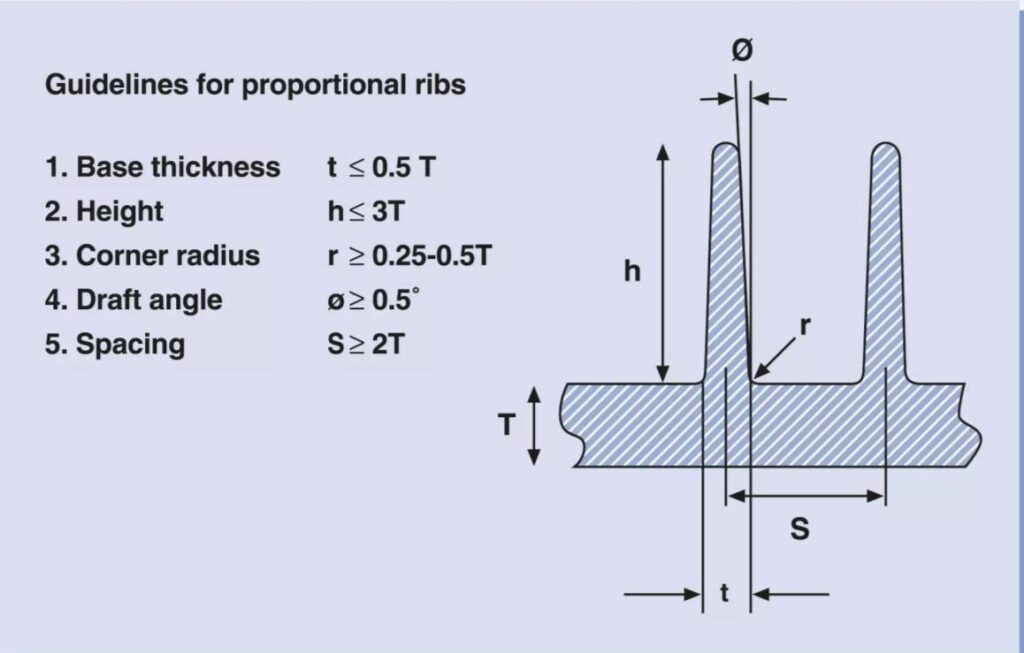
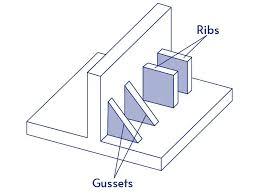
Ribs provide strength and stiffness without significantly increasing wall thickness.
Recommended:
Benefits:
- Rib thickness: 50–60% of nominal wall thickness.
- Add draft to rib walls.
- Use multiple ribs rather than one large rib.
- Increased rigidity.
- Reduced material usage.
- Less risk of sink marks.
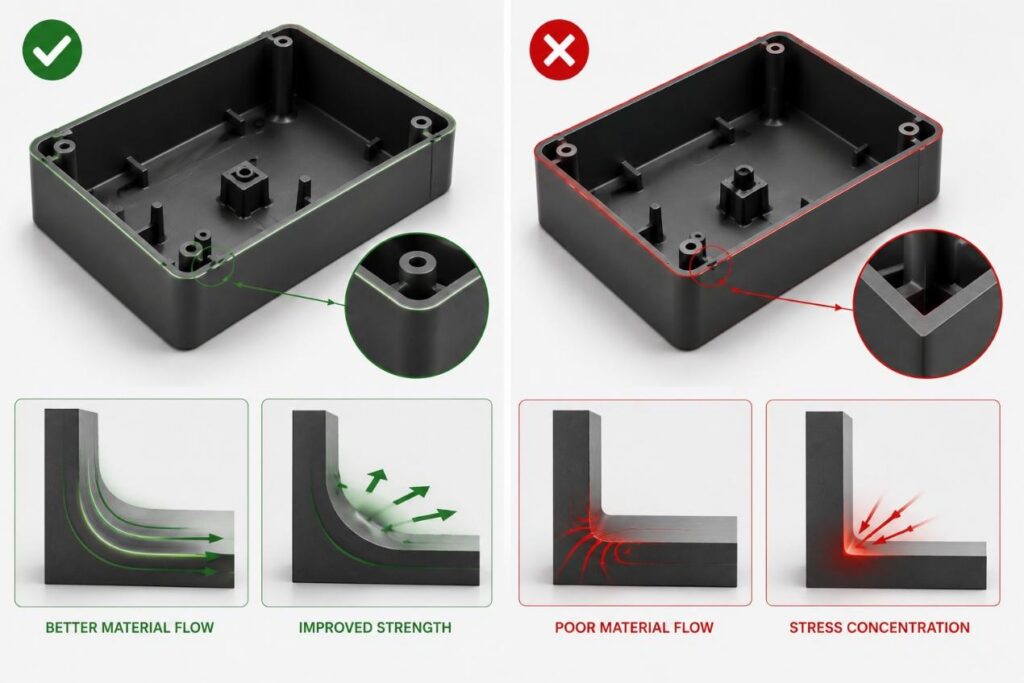
4. Design Proper Corner Radii
Sharp corners create stress concentrations and can impede material flow.
Recommended:
Benefits:
- Use inside radii whenever possible.
- Radius should typically be at least 25–50% of wall thickness.
- Maintain smooth transitions between features.
- Better material flow.
- Improved strength.
- Reduced stress cracking.
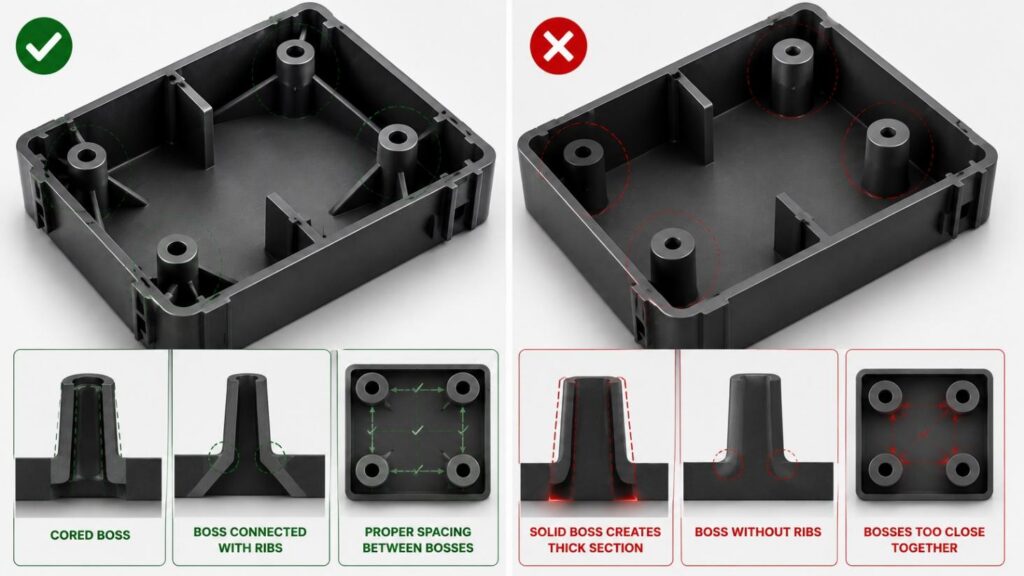
5. Optimize Boss Design
Bosses are commonly used for screws, inserts, and assembly features.
Recommended:
Benefits:
- Core out bosses to avoid thick sections.
- Connect bosses to nearby walls using ribs when possible.
- Maintain proper spacing between bosses.
- Reduced sink marks.
- Better dimensional stability.
- Improved assembly performance.
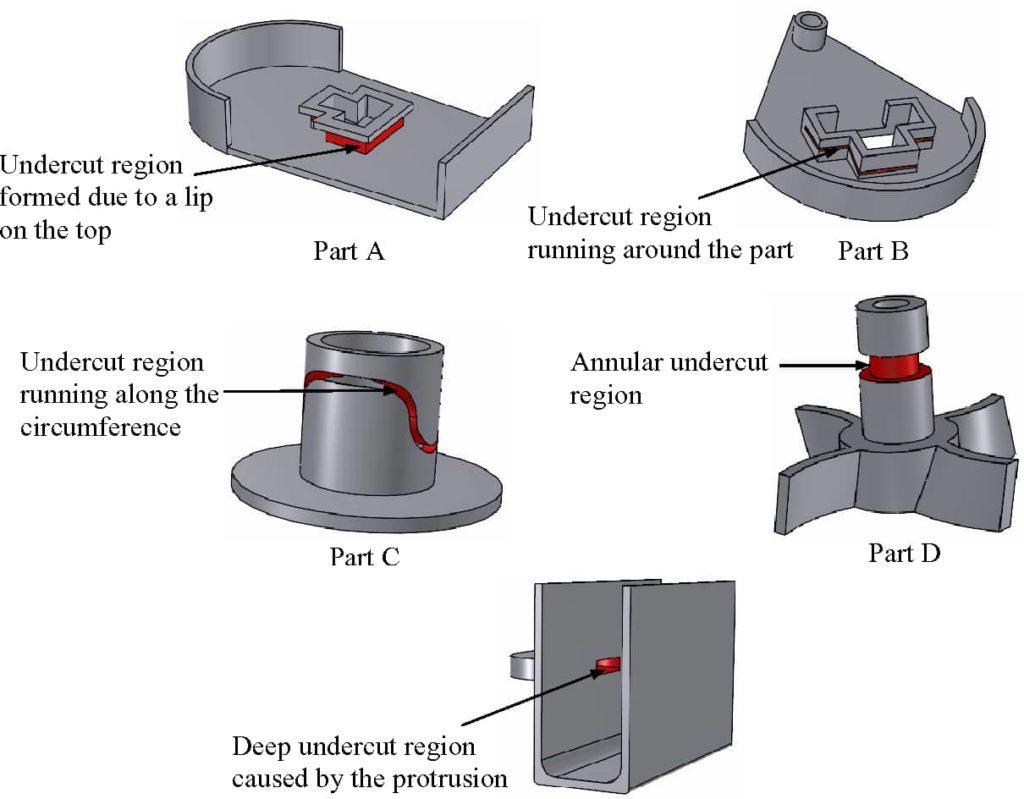
6. Avoid Undercuts When Possible
Undercuts increase tooling complexity and often require slides, lifters, or secondary operations.
Recommended:
Benefits:
- Simplify geometry when possible.
- Design features that can be molded in the tool opening direction.
- Evaluate whether an undercut is truly necessary.
- Lower tooling costs.
- Faster mold cycles.
- Simpler mold maintenance.
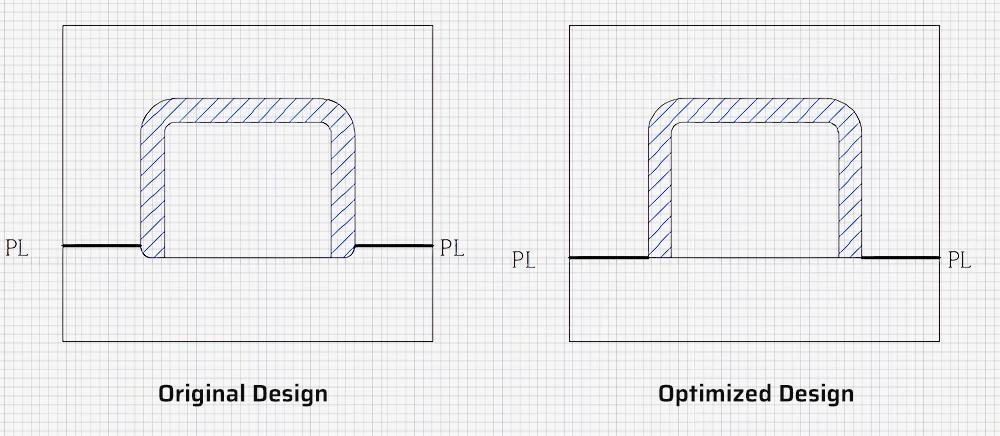
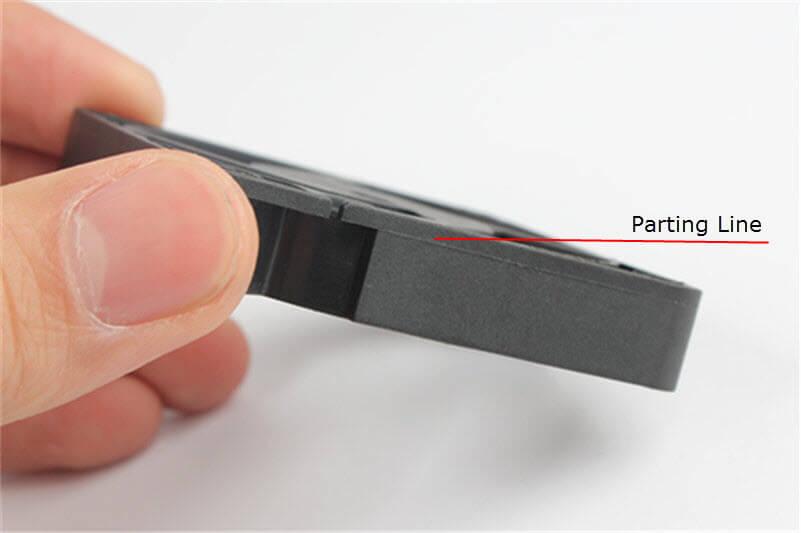
7. Consider Parting Line Location
The parting line is where the mold halves separate.
Recommended:
- Place parting lines in less visible areas.
- Avoid critical sealing surfaces.
- Consider moldability early in the design stage.