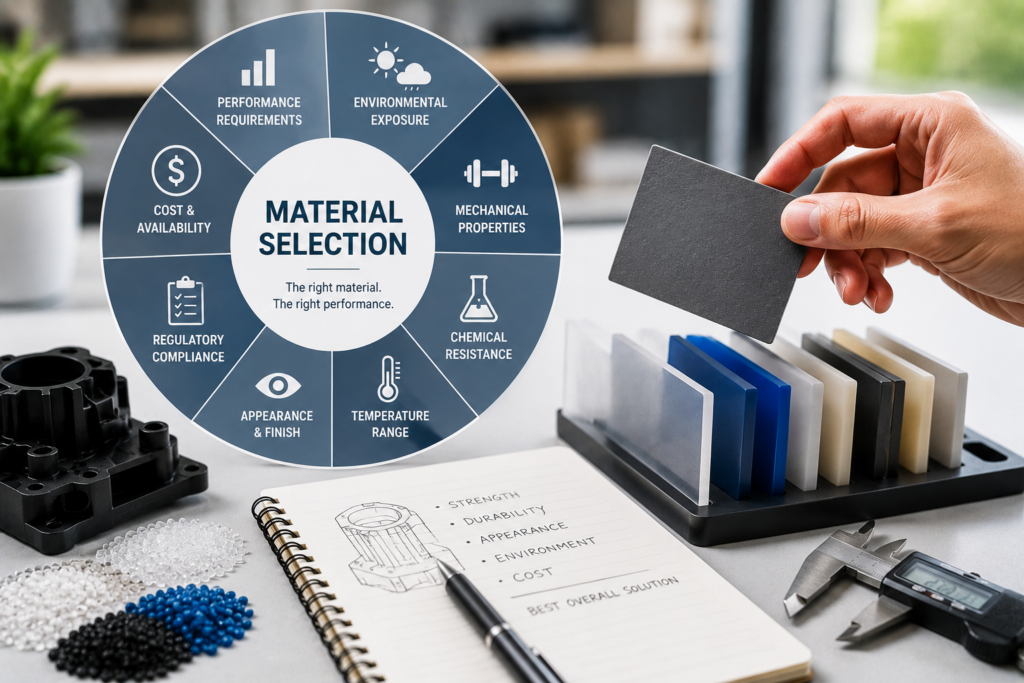
Selecting the right material is one of the most important decisions in any plastic manufacturing project. Material selection affects product performance, durability, appearance, manufacturability, and overall cost. Whether a part is produced through injection molding, blow molding, thermoforming, rotational molding, or LSR molding, choosing the appropriate material early in the development process can help improve product reliability and reduce long-term costs.
Product Function and Performance Requirements
The intended use of the product is often the starting point for material selection. Different applications require different combinations of strength, flexibility, impact resistance, and dimensional stability.
A structural component may require higher strength and rigidity, while a consumer product may prioritize appearance and durability. Understanding how the part will function throughout its lifecycle helps identify the material properties that are most important.
Environmental Exposure
The operating environment can have a significant impact on material performance. Products used indoors may have different requirements than those exposed to outdoor conditions or demanding industrial environments.
Factors to evaluate include:
- UV sunlight exposure
- Moisture and humidity
- Water contact
- Chemicals and cleaning agents
- High and low temperatures
- Outdoor weather conditions
Selecting a material that can withstand these conditions helps improve long-term performance and product life.
Mechanical Properties
Different materials offer varying levels of toughness, flexibility, wear resistance, and impact strength. Evaluating mechanical requirements early in the design process helps ensure the material can withstand expected loads and stresses.
Important considerations may include:
- Impact resistance
- Tensile strength
- Flexibility
- Rigidity
- Fatigue resistance
- Wear resistance
The right balance of these properties often depends on the specific application and operating conditions.
Temperature Resistance
Some products must perform reliably in elevated or low-temperature environments. Temperature can affect a material’s strength, flexibility, and dimensional stability.
Applications exposed to continuous heat, temperature cycling, or extreme weather conditions may require materials specifically suited for those environments.
Appearance and Aesthetic Requirements
Material selection can influence the overall appearance of the finished product. Factors such as color, texture, gloss, transparency, and surface finish may all play a role in the final design.
For consumer products, packaging, medical devices, and other highly visible components, appearance can be just as important as functional performance.
Chemical Compatibility
Many plastic components are exposed to chemicals during normal use. Oils, fuels, solvents, cleaning agents, and industrial chemicals can affect material performance if compatibility is not considered during development.
Proper material selection helps reduce the risk of cracking, swelling, discoloration, or premature material degradation.
Regulatory and Industry Requirements
Certain industries may require materials that comply with specific standards or regulations. Medical, food-contact, pharmaceutical, consumer, and electrical applications often have unique material requirements that should be evaluated early in the design process.
Understanding these requirements from the beginning can help avoid delays and simplify product development.
Product Life Expectancy
The expected service life of a product can also influence material selection. Products designed for long-term use may require enhanced durability, environmental resistance, and dimensional stability compared to products intended for shorter service lives.
Considering lifecycle expectations early can help ensure the material supports long-term product performance.
Balancing Performance and Cost
The highest-performing material is not always the best solution. Successful material selection involves balancing performance requirements with manufacturing efficiency, material availability, and overall project cost.
In many cases, multiple materials may meet the application’s requirements. Evaluating the advantages and tradeoffs of each option can help achieve the best balance between performance, manufacturability, and budget.
Working with an Experienced Manufacturing Partner
Material selection is often most successful when manufacturers are involved early in the development process. An experienced manufacturing partner can help evaluate performance requirements, environmental conditions, production goals, and design considerations to recommend materials that align with the application’s needs.
Early collaboration can help reduce development time, improve manufacturability, and support long-term product success.
Key Takeaways
Material selection impacts nearly every aspect of a plastic product, from performance and durability to appearance and cost. By carefully evaluating application requirements, environmental conditions, mechanical properties, regulatory considerations, and long-term performance expectations, manufacturers can make informed decisions that contribute to a successful product and efficient production process.