Cleanroom Medical Injection Molding Services

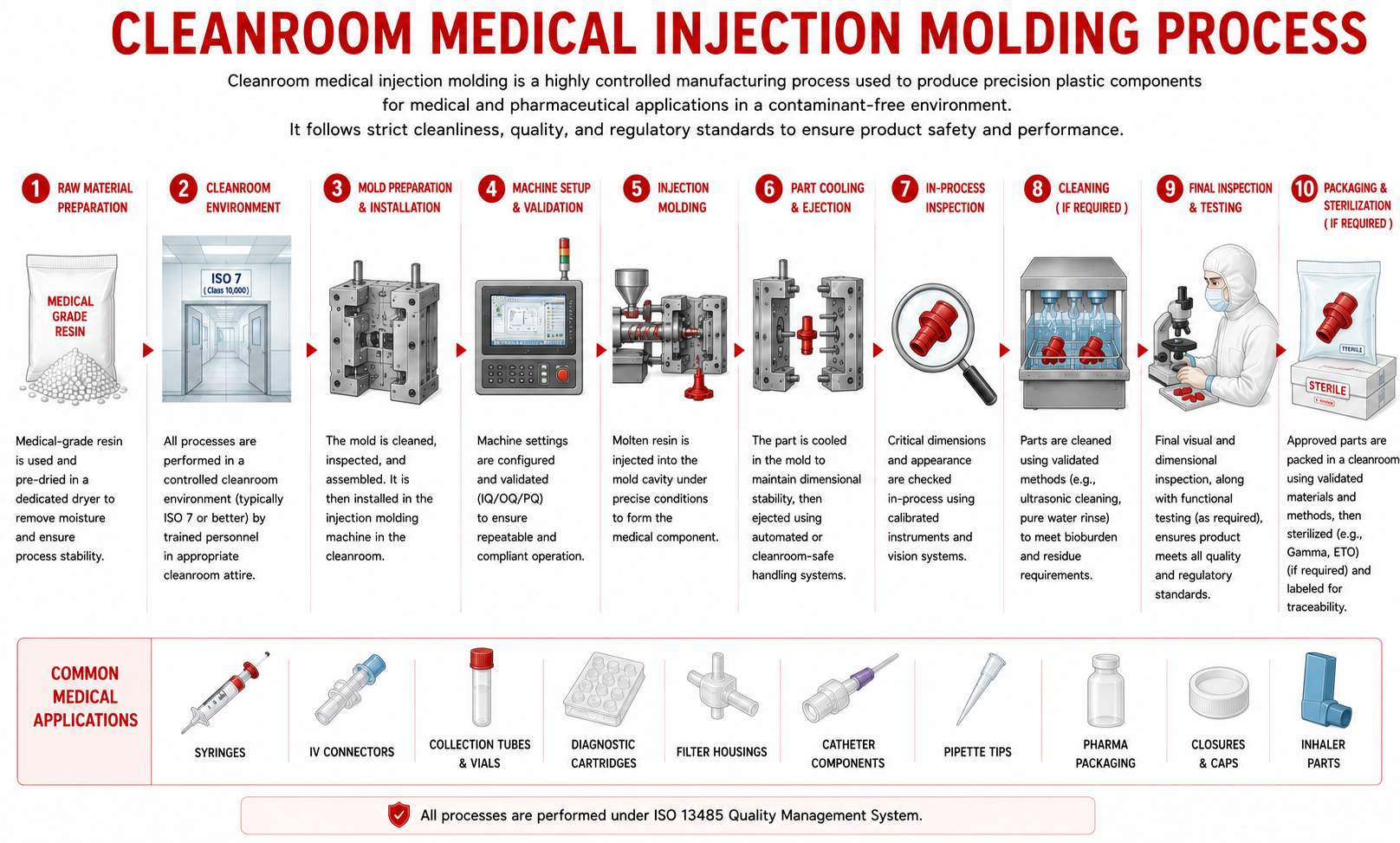
Cleanroom medical injection molding is a highly controlled manufacturing process used to produce plastic components for medical, pharmaceutical, and life sciences applications in a regulated, contamination-free environment. This process ensures that parts are molded, handled, and packaged under strict environmental controls to minimize particulate, microbial, and environmental contamination, meeting the stringent requirements of medical-grade production.

Capabilities

  • Highly-Reliable, high-precision, high-quality injection molding for complex and tight-tolerance plastic components for a wide range of industries
  • Operations are supported by an ISO 7 (Class 10,000) cleanroom environment for controlled medical manufacturing
  • Complete molding services from concept to production, including part evaluation, design support, prototyping, mold design, tooling, sampling, and full-scale manufacturing
  • Experienced engineering team focuses on design for manufacturability (DFM) to optimize performance, reduce costs, and ensure efficient production
  • Cost-effective solutions tailored to customer specifications and demanding industry standards
  • Prototype, low-volume, and high-volume production molding capabilities
  • Vertical injection molding capabilities for insert molding and overmolding applications requiring secure part integration and complex assemblies
  • Multi-cavity, family, insert, overmold, and micro-molding capabilities for complex, tight-tolerance components
  • Manufacturing complex components with tight tolerances up to ±0.001 inch, maintaining extremely low rejection rates and superior quality standards
  • Secondary services for cleanroom medical injection molding include cleanroom assembly, ultrasonic welding, heat staking, adhesive bonding, precision trimming, pad printing, in-process and final inspection, leak and functional testing, validated cleaning processes, and cleanroom packaging (including sterile and medical-grade barrier packaging) to support complete device and subassembly solutions
  • Complete tooling services, including mold design, build support, maintenance, repair, and engineering changes for long-term production reliability
  • Automation-ready production systems with robotic part handling to improve consistency and reduce contamination risk
  • On-time delivery with JIT (Kanban) programs

Controlled Cleanroom Environment

Manufacturing in regulated environments to reduce contamination and maintain product integrity.

Medical-Grade Materials

Experience with resins suited for biocompatibility and sterilization requirements.

Precision & Consistency

Tight-tolerance molding ensures reliable, repeatable components for medical use.

Quality & Compliance Focused

Processes designed to meet strict industry standards and regulatory expectations.
Key Materials for Cleanroom Medical Injection Molding

  • Polyether Ether Ketone (PEEK): Ultra-high-performance thermoplastic with exceptional strength, chemical resistance, and high-temperature stability. Common in surgical instruments, implantable components, and demanding medical devices.
  • Polyetherimide (PEI, ULTEM): High-strength, flame-resistant thermoplastic with excellent dimensional stability and sterilization resistance, widely used in medical housings, connectors, and diagnostic equipment.
  • Polyphenylsulfone (PPSU): High-impact, hydrolysis-resistant material designed for repeated sterilization cycles, often used in surgical trays, reusable medical components, and fluid handling systems.
  • Polysulfone (PSU): Transparent, rigid thermoplastic with good thermal stability and chemical resistance, used in medical devices requiring clarity and sterilization compatibility.
  • Polycarbonate (PC): High-impact, transparent material used in medical housings, fluid reservoirs, and diagnostic device components requiring clarity and toughness.
  • Polypropylene (PP): Lightweight, chemically resistant thermoplastic widely used in disposable medical devices, syringes, containers, and fluid handling components.
  • High-Density Polyethylene / Low-Density Polyethylene (HDPE / LDPE): Durable, chemical-resistant materials used in medical packaging, fluid containers, caps, and tubing-related components.
  • Acrylonitrile Butadiene Styrene (ABS): Rigid, impact-resistant thermoplastic used in device housings, diagnostic equipment, and non-implantable medical components.
  • Thermoplastic Elastomer / Thermoplastic Polyurethane (TPE / TPU): Flexible, biocompatible materials used for seals, grips, tubing components, overmolded features, and soft-touch medical interfaces.
  • Liquid Silicone Rubber (LSR): Highly biocompatible elastomer used for seals, gaskets, valves, respiratory components, and implantable or skin-contact medical applications requiring flexibility and purity.

Common Cleanroom Medical Applications

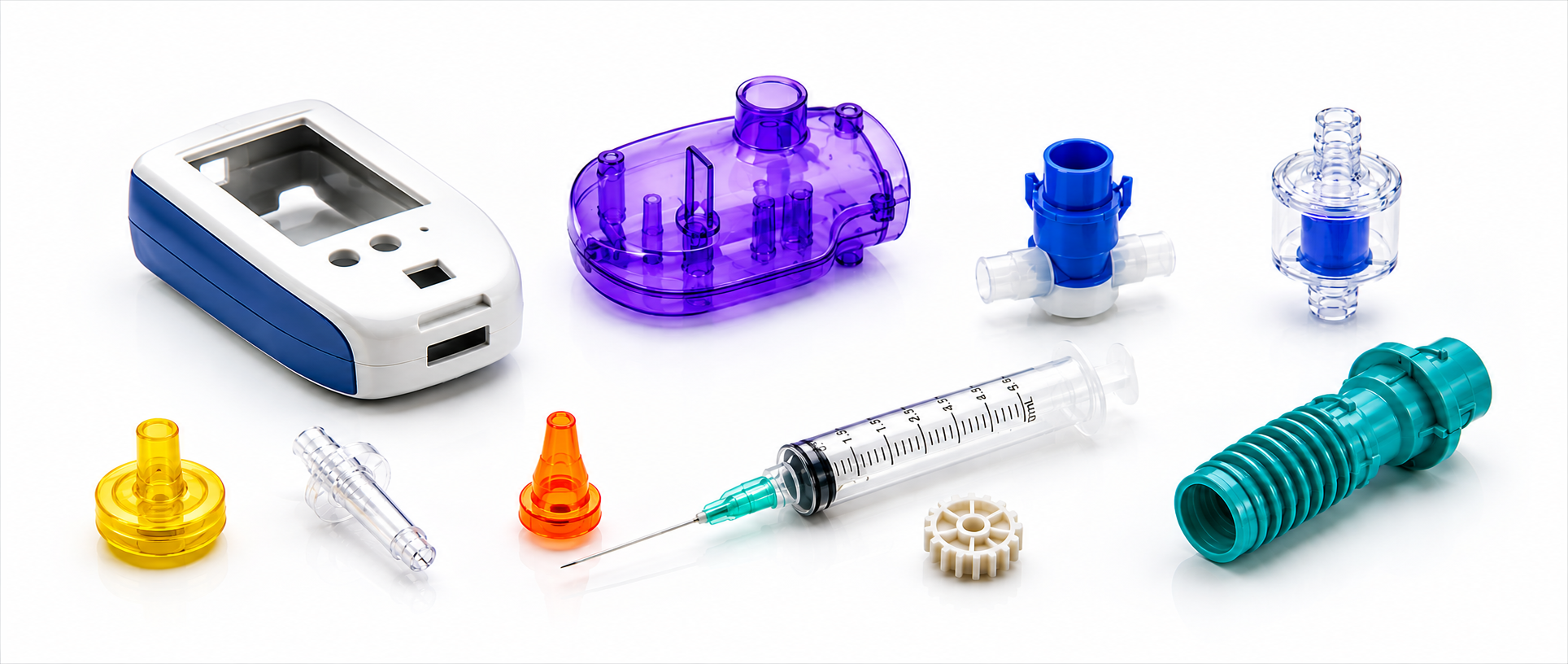
  • Medical Devices & Diagnostics: Device housings, diagnostic instrument components, analyzers, test cartridges, sample handling systems, and precision structural components requiring high accuracy and clean manufacturing environments.
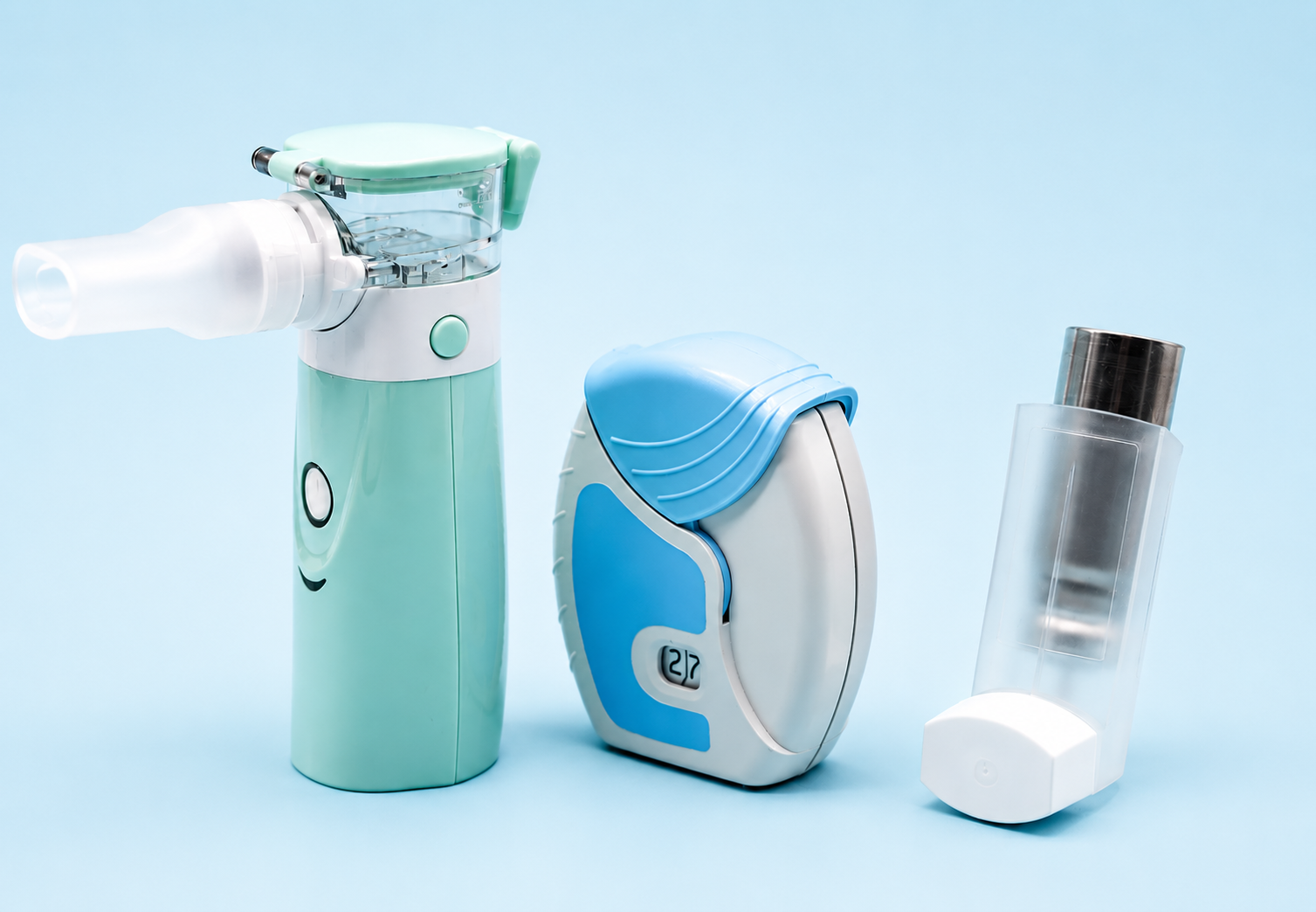
  • Drug Delivery Systems: Syringe components, auto-injector housings, inhaler parts, IV system components, pump housings, and disposable delivery devices requiring consistent performance and biocompatibility.
  • Surgical & Operating Room Products: Surgical instrument handles, trays, sterilizable tool components, clamps, housings, and reusable or single-use surgical system parts designed for repeated sterilization cycles.
  • Fluid Management & IV Systems: Connectors, manifolds, valves, reservoirs, tubing interfaces, and flow control components requiring leak-free performance and chemical resistance.
  • Respiratory & Patient Care Equipment: Mask components, ventilator parts, breathing system connectors, oxygen delivery components, and patient interface devices requiring precision and comfort.
  • In Vitro Diagnostic (IVD) Products: Test cartridges, microfluidic components, lab consumables, sample chambers, and precision diagnostic disposables used in laboratory and point-of-care testing.
  • Implantable & Skin-Contact Components: Biocompatible housings, flexible seals, soft-touch interfaces, and components designed for prolonged or direct patient contact.
  • Medical Packaging & Disposable Components: Sterile packaging components, trays, caps, closures, sample containers, and single-use disposable medical products designed for hygiene and contamination control.

Get started

Get Started with Hi-Rel Plastics Today!